
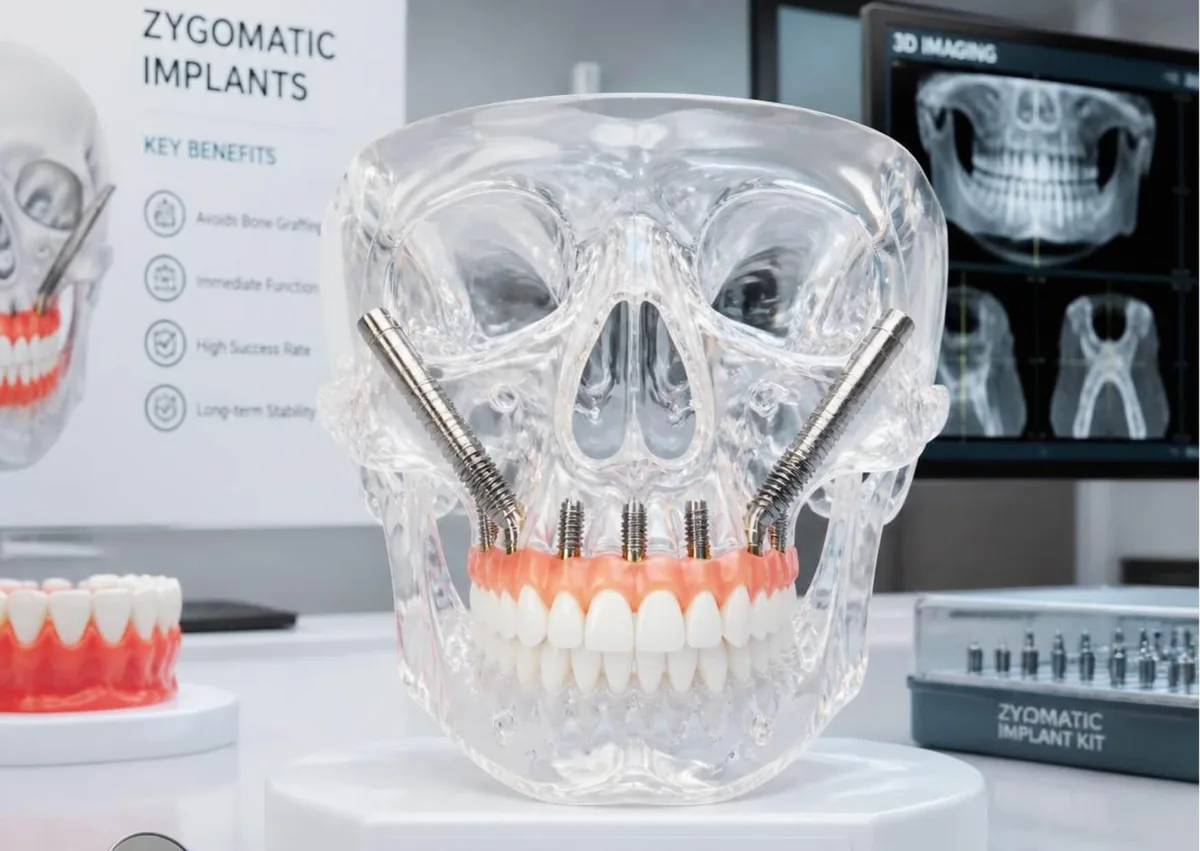
Zygomatic dental implants may make fixed upper replacement teeth possible when severe bone loss in the upper jaw rules out conventional implants. Instead of depending on a limited jawbone, these longer implants anchor in the cheekbone, or zygoma, which can reduce or sometimes avoid the need for extensive bone grafting.
If severe upper-jaw bone loss has made you wonder whether fixed teeth are still possible, learning about dental implants can help you understand whether a zygomatic approach or another option fits your needs. At CR Smiles in Katy, TX, we focus on patient-centered implant care designed to restore comfort, function, and a natural feel.
Conventional dental implants are placed in the jawbone. Zygomatic implants are much longer and follow an angled path through the upper jaw to anchor in the cheekbone, which often remains dense even when the upper jaw has lost significant bone.
This treatment is usually used for a full-arch upper restoration, not for a single missing tooth. In many cases, zygomatic implants are combined with conventional implants if enough bone remains in the front of the upper jaw.
Because the implant path is close to the sinuses, eye sockets, nerves, and other important structures, treatment requires advanced planning and surgical experience. Zygomatic implant placement is a specialized procedure rather than a routine implant service.
If you come across unfamiliar terms, our dental dictionary explains common dental vocabulary.
Zygomatic implants may be considered for people who have lost most or all upper teeth and have severe bone loss from long-term tooth loss, gum disease, trauma, or a failed grafting or implant procedure. They can also help patients who have been told they would need major bone reconstruction before getting traditional upper implants.
Candidacy depends on more than bone volume alone. Your clinician also needs to evaluate overall health, sinus health, oral hygiene, smoking or nicotine use, bite forces, prior surgeries, and your ability to maintain the restoration over time.
Conditions such as uncontrolled diabetes, active oral infection, untreated sinus disease, and some immune or bone disorders may increase risk or need treatment first. Certain medications and prior radiation to the head or neck can also affect planning, and in some cases tooth extractions are needed before implant placement.
Bone grafting rebuilds the upper jaw so conventional implants may be placed later. Depending on the amount of bone loss, that process can involve sinus augmentation, graft healing, implant placement, and another healing period before final teeth are attached.
Zygomatic implants use existing cheekbone support and can shorten treatment in selected cases. They are not automatically better than grafting, and the best option depends on anatomy, health, treatment goals, and the experience of the clinical team.
Some patients may qualify for tilted conventional implants without major grafting. Others may need a combination of conventional and zygomatic implants, so a careful comparison should include surgical risk, treatment time, maintenance, cost, and backup plans if an implant does not integrate.
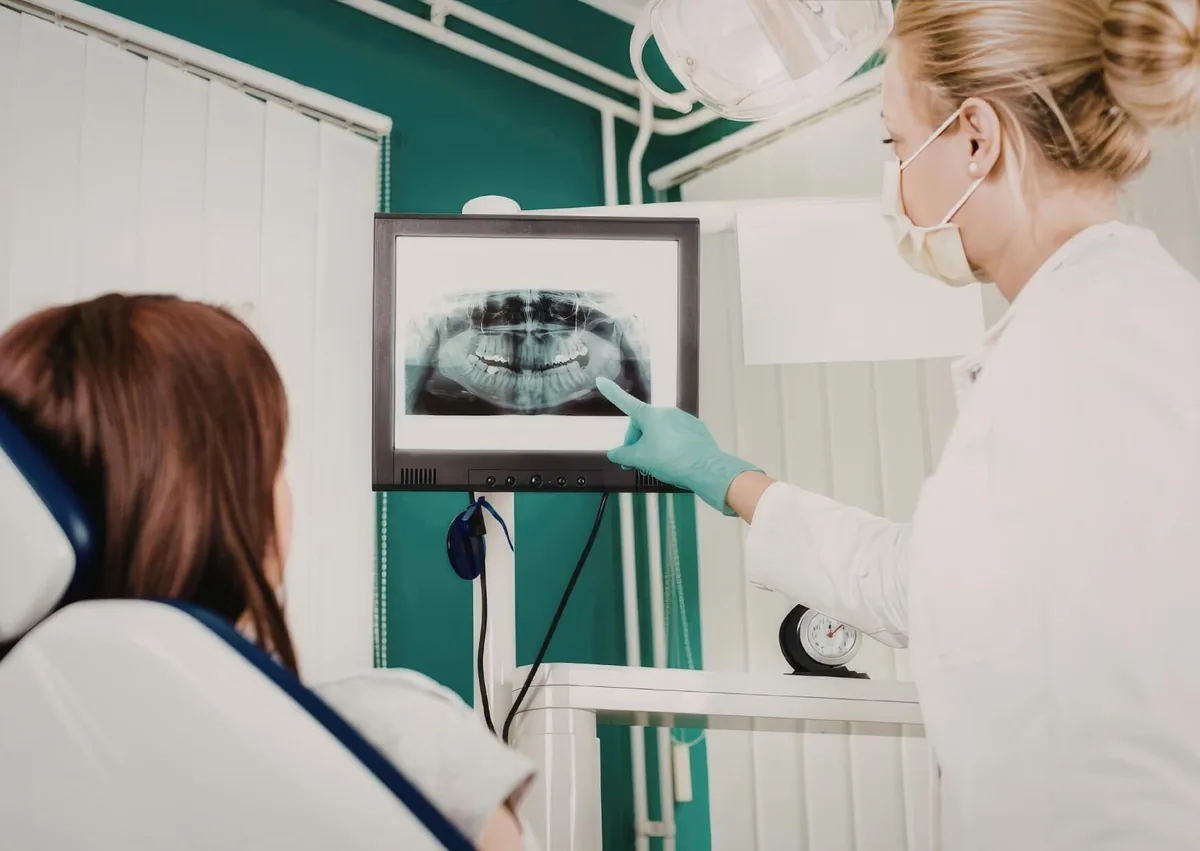
Planning usually starts with a comprehensive exam and three-dimensional cone-beam computed tomography, or CBCT. This scan helps the team evaluate bone, sinus anatomy, implant pathways, and the position of nearby structures.
The restorative plan should be designed before surgery so implant placement supports the intended tooth position, bite, appearance, speech, and cleanability. Digital planning and surgical guides may be used, although the exact method depends on the case and the surgeon's approach.
It is reasonable to ask who will perform the surgery, how often that clinician treats severe upper-jaw bone loss, and how the surgical and restorative phases will be coordinated. You can also ask whether a specialist will be involved; our dental specialties page explains common roles.
Zygomatic implants are commonly placed with local anesthesia plus sedation or, in some cases, general anesthesia. Before treatment, the team should explain fasting instructions, transportation needs, anesthesia risks, and recovery expectations.
If the implants achieve strong initial stability, a temporary fixed bridge may sometimes be attached the same day or soon after surgery. This is called immediate loading, but it is not appropriate for every case, and temporary teeth still need protection during healing.
Swelling, bruising, congestion, soreness, and temporary chewing changes can happen after surgery. Most discomfort improves over several days, although recovery varies based on the number of implants, added procedures, health factors, and individual healing.
Zygomatic implants can support teeth that feel more stable than removable dentures. The final bridge may improve chewing, speech, facial support, and confidence, but long-term success depends on healing, implant position, bite design, hygiene, and regular professional care.
Possible complications include infection, sinus inflammation, bleeding, altered sensation, gum recession, implant exposure, failure to integrate, or loosening and wear of restorative components such as dental crowns. Rare but serious complications can involve nearby facial or orbital structures, which is why careful imaging and specialized training matter; published research also discusses sinus and orbital risks.
A fixed bridge still needs daily cleaning underneath it with tools recommended by your dental team. Ongoing exams and professional periodontal maintenance help catch inflammation, bite problems, worn components, or implant instability early, and long-term studies have reported a high cumulative survival rate, though no outcome can be guaranteed for every patient.
After surgery, contact the treating team promptly for worsening pain or swelling, persistent bleeding, fever, foul drainage, vision changes, severe headache, trouble breathing or swallowing, or new facial numbness. Major bleeding, breathing difficulty, or vision loss requires emergency care.
A consultation with an experienced implant surgeon and restorative dentist can help you compare zygomatic dental implants with bone grafting, conventional implants, or removable options. Bringing prior scans, surgical records, a medication list, and your questions can make that discussion more useful and specific to your case.
The next step is a detailed implant evaluation to review your scans, discuss whether dental implants or zygomatic solutions are the safest fit, and understand what treatment may involve. CR Smiles focuses on dental implants in Katy, TX and serves nearby Fulshear and Houston; call (281) 394-9600 to schedule a consultation.
Anesthesia is used during placement, so pain is usually controlled during surgery. Afterward, soreness, swelling, bruising, and sinus-related discomfort can occur, and your treating team should give you specific recovery instructions.
A temporary fixed bridge can sometimes be attached on the day of surgery if implant stability and other clinical factors are favorable. Same-day teeth are not guaranteed, and a temporary bridge usually requires a softer diet and careful use during healing.
They are intended to be a long-term treatment, but no implant can be guaranteed for life. Longevity depends on health, smoking or nicotine exposure, hygiene, bite forces, restoration design, complications, and consistent follow-up care.
It depends on the type and severity of the sinus condition. Active or chronic sinus disease may need evaluation by the implant team and sometimes an ear, nose, and throat specialist before treatment can move forward.
The implants themselves remain anchored in place, while the attached bridge is usually fixed and removed only by a dental professional for maintenance or repair. Patients still need to clean carefully around and beneath the bridge every day.