
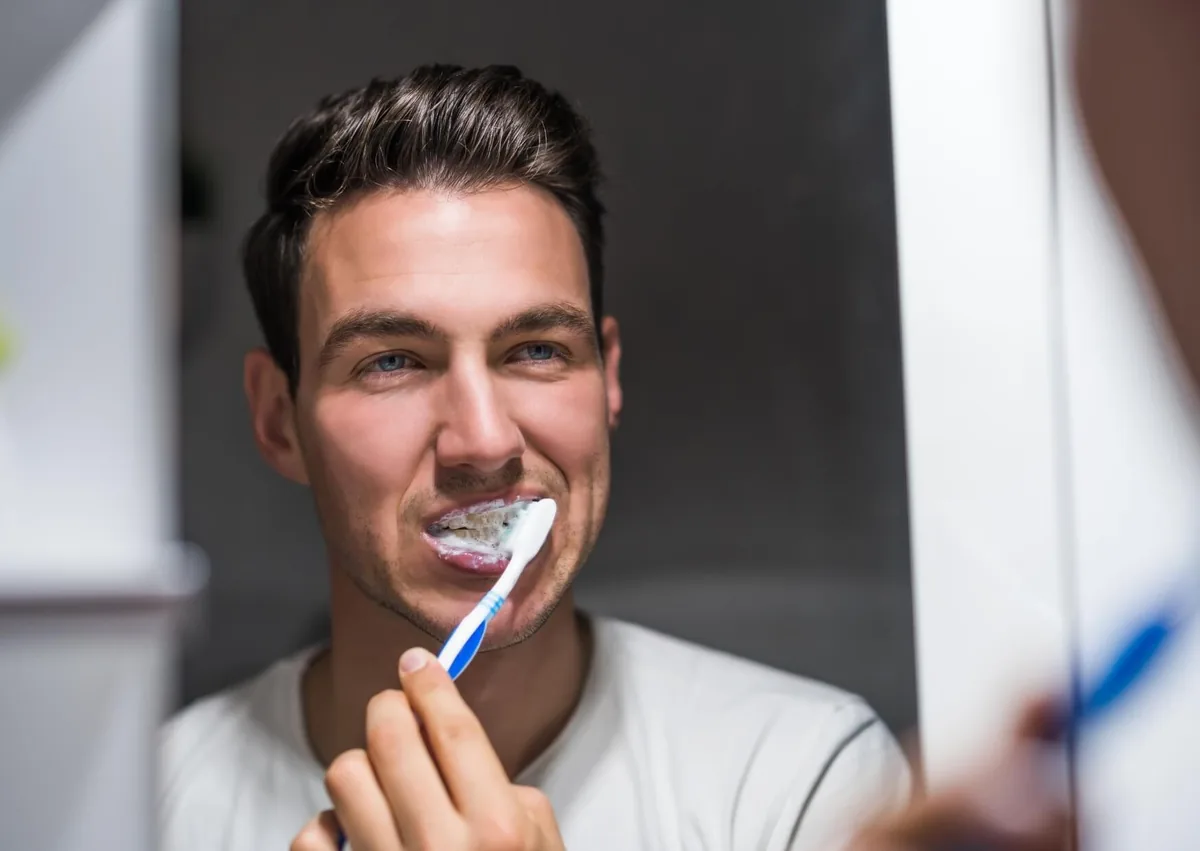
To remove plaque from teeth, brush twice a day with fluoride toothpaste and clean between your teeth once a day with floss or another interdental cleaner. Plaque is soft and can usually be removed at home, but once it hardens into tartar, it needs professional dental instruments for safe removal.
If plaque has hardened into tartar or you've noticed persistent gum inflammation, ongoing targeted cleanings can help prevent further damage and stabilize healing. CR Smiles in Katy, TX offers periodontal maintenance to keep gums healthy and make daily cleaning more effective.
Use a soft-bristled manual or powered toothbrush for two full minutes. Clean the outer, inner, and chewing surfaces of every tooth, and angle the bristles gently toward the gumline.
Use small circular motions instead of hard scrubbing. Aggressive brushing does not remove plaque better, and it can irritate gums or wear tooth surfaces over time.
Clean between your teeth every day because a toothbrush cannot fully reach those tight spaces. Floss works well for close contacts, while interdental brushes may be easier around wider spaces, bridges, braces, or dental implants.
After brushing with fluoride toothpaste, spit out the excess instead of rinsing right away. This allows fluoride to remain on the teeth longer, although fluoride helps strengthen enamel rather than physically removing plaque.
Plaque-disclosing tablets or solutions can help show the areas you miss. Follow the directions carefully, since the dye can briefly stain the tongue, lips, restorations, or clothing.
Plaque is a sticky, usually colorless film of bacteria that forms on teeth throughout the day. It often collects along the gumline and between teeth, where it can contribute to bad breath, cavities, and gum irritation.
If plaque stays on the teeth, minerals in saliva can harden it into tartar, also called calculus. Tartar cannot be safely removed at home with brushing or flossing.
Tartar may feel rough and can look yellow, tan, brown, or dark near the gumline. Surface stains from coffee, tea, tobacco, or deeply pigmented foods can look similar, but they are not the same thing.
A dental exam can tell the difference between stain, tartar, decay, and enamel changes. Surface stains that remain after a professional cleaning can often be improved with teeth whitening, and broader cosmetic dentistry options may also help.
|
Finding |
Typical Features |
Appropriate Removal |
|---|---|---|
|
Plaque |
Soft or sticky film, often near the gums |
Daily brushing and interdental cleaning |
|
Tartar |
Hard, rough deposit that stays after brushing |
Professional dental cleaning |
|
Surface stain |
Discoloration without a soft film |
Professional polishing or other dentist-guided care |
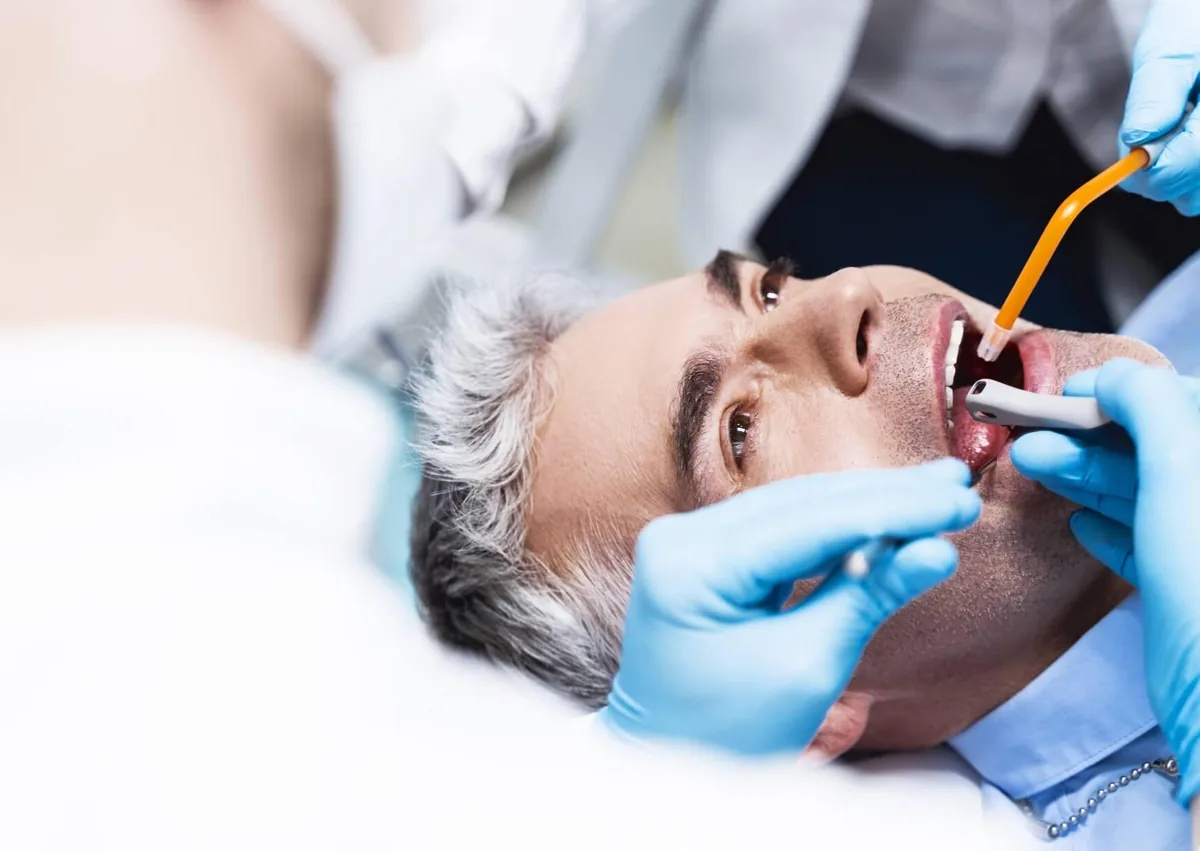
During a routine cleaning, a dental professional removes plaque and tartar with hand instruments or an ultrasonic scaler. A professional teeth cleaning may also include polishing to reduce surface stain and leave the teeth feeling smoother.
If buildup extends below the gums or gum disease has created deeper pockets, scaling and root planing may be recommended. In some cases, gum disease laser therapy may be used to treat infected tissue and support healing.
Routine cleanings are often comfortable, though sensitive teeth or inflamed gums can feel tender and may bleed a little. Deeper cleanings are usually done with local anesthetic when needed for comfort.
After a routine cleaning, teeth often feel smoother and cleaner right away. If surface stain was present, your smile may also look brighter.
If you need deeper cleaning, mild soreness or temperature sensitivity can happen for a short time. Your dental team can explain aftercare, comfort options, and what results to expect based on your gum health.
The main goal is not just cleaner teeth for the day. Removing plaque and tartar helps reduce inflammation and makes home care more effective going forward.
Do not scrape your teeth with fingernails, metal tools, dental picks, or household objects. These methods can cut the gums, scratch enamel or restorations, and push bacteria deeper under the gumline.
Avoid harsh scrubbing and frequent use of abrasive powders, acidic mixtures, or undiluted peroxide. These approaches can irritate oral tissues and wear enamel, and whitening products do not remove tartar.
If plaque seems to come back quickly, the issue may be crowded teeth, dry mouth, braces, limited hand dexterity, or a technique problem. A dentist or hygienist can recommend better tools and show you how to use them.
Consistency matters more than force. Replace your toothbrush or powered brush head every three to four months, or sooner if the bristles are frayed.
A powered toothbrush may help if plaque is hard to control. Regular dental visits also help identify plaque-retention areas, cavities, and early gum changes before they become harder to manage.
The right cleaning schedule depends on your gum health, tartar buildup, medical history, and other risk factors. Many patients benefit from ongoing periodontal maintenance.
Arrange a dental evaluation if your gums bleed often, swelling or bad breath does not improve, teeth feel loose, gums seem to recede, or pain and sensitivity continue. Seek prompt care for facial swelling, fever, trouble swallowing or breathing, uncontrolled bleeding, or rapidly worsening pain.
A dental professional can confirm whether the buildup is soft plaque, hardened tartar, staining, or something else. That guidance can make daily cleaning more comfortable, more effective, and less frustrating.
A dental evaluation can confirm whether periodontal maintenance or additional treatment is needed and will make home care more effective. Call CR Smiles for dental cleanings and periodontal maintenance in Katy, TX, serving Cinco Ranch and Fulshear, at (281) 394-9600 to schedule your appointment.
Soft plaque can often be removed with one thorough brushing and interdental-cleaning session. Hardened tartar will not come off and needs professional removal.
Mouthwash may help reduce bacteria or support gum health, depending on the formula. It does not replace brushing and cleaning between the teeth, and it cannot remove tartar.
Bleeding often happens when plaque has already inflamed the gums. Brushing or flossing too hard can also cause irritation, so use a gentle technique and get checked if bleeding is heavy, persistent, or getting worse.
A water flosser can be helpful, especially around braces, bridges, or implants. The best tool depends on your tooth spacing and gum health, so a dental professional may recommend a water flosser alone or along with floss or interdental brushes.