The full mouth dental implants cost often ranges from about $40,000 to $80,000 or more in the United States when both arches are treated. In many cases, pricing is quoted per arch, and the final total depends on the type of restoration, number of implants, materials, imaging, sedation, extractions, bone grafting, and whether temporary teeth are included.
These are broad educational estimates, not a personal quote. A clinical exam and 3D imaging are usually needed to confirm whether implants are appropriate and what the complete treatment will cost.
If you're weighing options for replacing most or all teeth, understanding dental implants can clarify choices shaped by bone health, function, and cost. At CR Smiles in Katy, our dental implant planning helps you weigh fixed and removable options and understand timelines, materials, and likely costs.
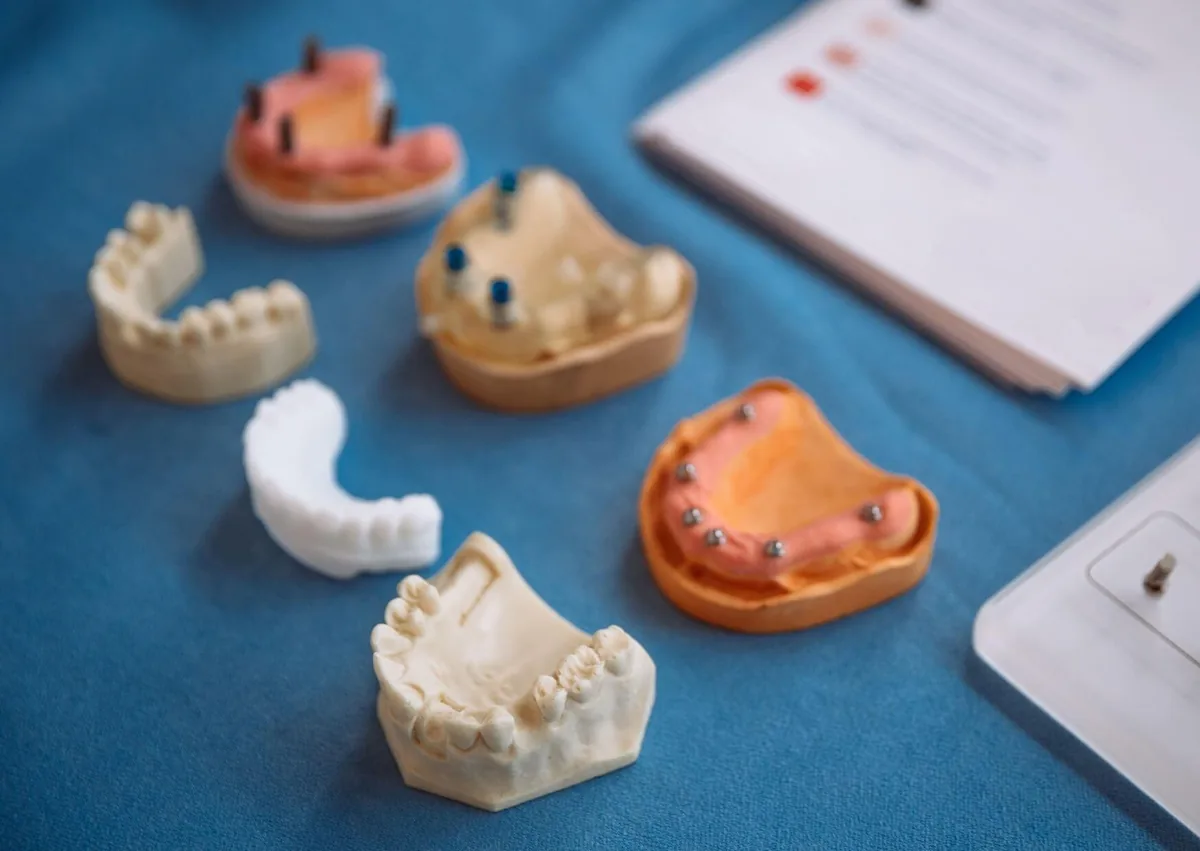
Full-mouth implant treatment replaces all or nearly all teeth in the upper jaw, lower jaw, or both. Instead of placing one implant for every missing tooth, a dentist may use several implants to support a fixed bridge or a removable overdenture.
A complete estimate may include the exam, digital scans, cone-beam CT imaging, surgery, implant parts, temporary teeth, lab work, and the final prosthesis. It should also state whether sedation, extractions, grafting, follow-up visits, and maintenance are included or billed separately.
Patients should confirm whether a quoted fee covers one arch or both arches. Some advertised prices refer only to the surgical phase, not the full treatment from planning through final teeth.
The biggest cost difference often comes from whether the replacement teeth are removable or fixed. The ranges below are broad U.S. estimates and can vary by anatomy, materials, and region.
|
Treatment Option |
How It Works |
Broad Estimated Cost |
|---|---|---|
|
Implant-retained removable overdenture |
A removable denture attaches to implants for added stability |
$8,000 to $25,000 per arch |
|
Fixed full-arch implant bridge |
A full set of teeth is secured to several implants and removed only by a dental professional |
$20,000 to $40,000 or more per arch |
|
Individual implant-supported restorations |
Multiple implants support separate crowns or smaller bridges |
Often $40,000 to $100,000 or more for extensive treatment |
An overdenture may cost less and can be easier to clean, but it must be removed at home. A fixed bridge usually feels more like natural teeth, but it often involves higher surgical and lab costs and requires careful cleaning underneath.
Published cost ranges can help set expectations, but they do not replace a personalized treatment plan. The right design should be based on bone support, bite forces, function, and long-term maintenance, not price alone.
Bone volume is one of the biggest clinical factors. If the jawbone has shrunk after tooth loss, grafting or other surgical procedures may be needed to create enough support, which adds cost and healing time.
The material used for the final teeth also affects the fee. Acrylic or composite teeth may have a lower starting cost, while zirconia and other stronger ceramics often cost more because of the material and fabrication process.
Other common cost factors include:
Complex medical or dental conditions can also change the plan. A careful estimate should separate required treatment from optional upgrades and explain what could change the fee during treatment.
Full-mouth implants may be considered when teeth are missing, failing, badly worn, extensively decayed, or affected by advanced gum disease. They may also help people who struggle to chew with traditional dentures, although keeping healthy natural teeth is often the better option when possible.
Candidates need enough healthy bone for implant support or a realistic plan to manage bone loss. The dentist will also evaluate gum health, bite, smile line, cleaning ability, tobacco or nicotine use, teeth grinding, and medical conditions that may affect healing.
Uncontrolled diabetes, active gum infection, certain medications, prior radiation treatment, or heavy smoking may increase risk, but they do not always rule out implants. Active gum disease often needs treatment first, and options such as gum disease laser therapy may affect timing and cost.
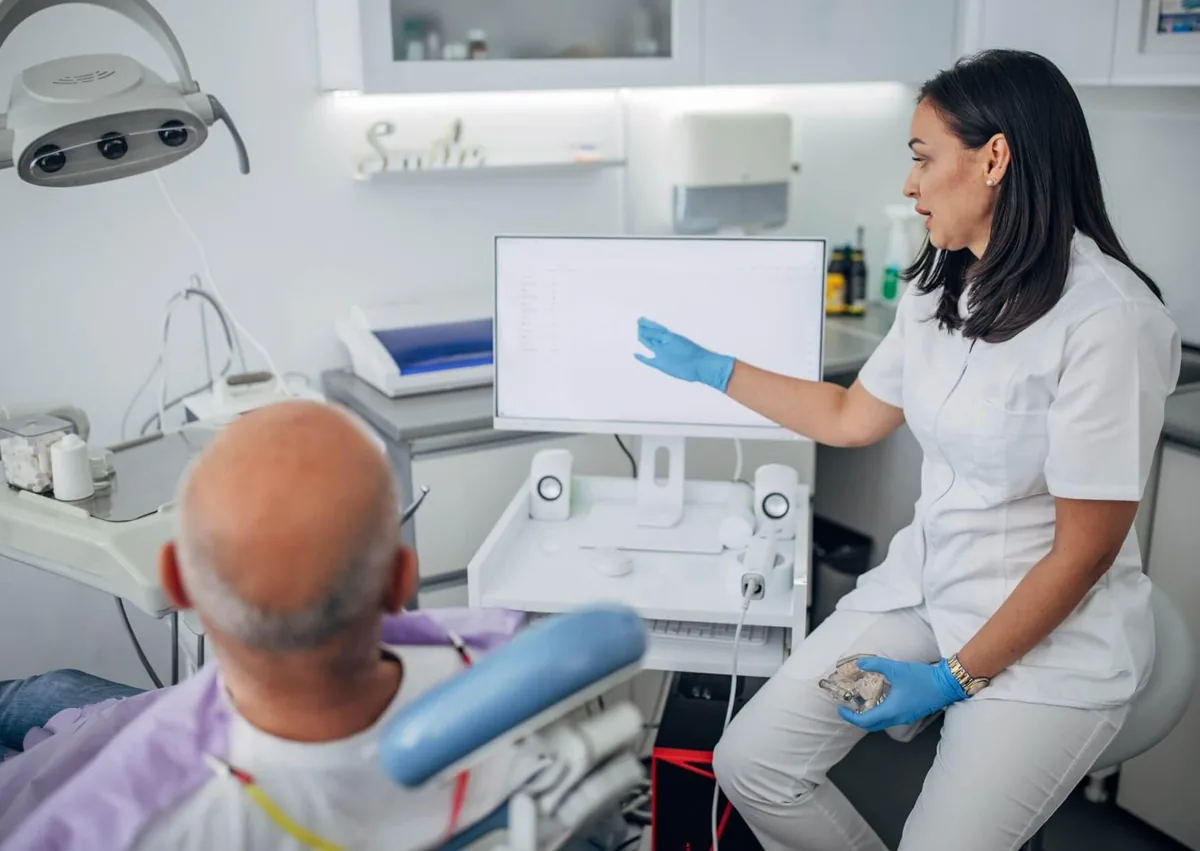
Planning usually begins with an exam, photos or digital scans, and 3D imaging. The final tooth design should be planned before surgery so implant placement supports appearance, bite, comfort, and cleaning.
During surgery, local anesthetic numbs the area, and sedation may be available depending on the case and setting. Patients may feel pressure or vibration, but sharp pain should not occur during the procedure.
After surgery, soreness, swelling, and bruising are common early on. Some patients receive a temporary fixed bridge on the same day or soon after implant placement, but that does not mean the final teeth are ready.
Immediate-load or same-day teeth are only appropriate when implant stability, bone quality, and bite conditions allow it. Many implants still need several months to bond with the jawbone before the final restoration is made.
For more on timing, learn how long a tooth implant takes. During healing, diet changes and careful cleaning matter, including guidance on what to eat and why no dairy.
Implant-supported teeth can improve chewing, speech, confidence, and smile appearance. They are built for durability, but no implant or prosthesis can be guaranteed for life.
Implants do not get cavities, but inflammation and bone loss can still develop around them. Good home care, professional maintenance, and periodic imaging remain important.
Long-term budgeting matters because maintenance and repairs are part of ownership. Temporary or final teeth can chip or wear, screws can loosen, removable attachments may need replacement, and some prostheses eventually need major refurbishment.
Dental insurance may help with parts of treatment such as the exam, extractions, grafting, implants, or the prosthesis. Even so, annual maximums, waiting periods, and exclusions often limit how much is reimbursed.
Medical insurance sometimes contributes when treatment is tied to trauma, congenital conditions, or medically necessary reconstruction. Coverage is highly plan-specific, so patients should verify benefits in writing.
Ask for a written, itemized treatment plan before moving forward. It should list the number of arches and implants, temporary and final materials, sedation, grafting, follow-up care, maintenance expectations, and possible revision costs.
Financing can spread the cost into monthly payments, but the details matter. Compare interest rates, deferred-interest terms, fees, and what services are actually included before deciding.
A consultation should cover more than the lowest advertised price. Ask who performs each phase, what alternatives may preserve natural teeth, why a certain number of implants is recommended, and what happens if an implant does not integrate.
A second opinion may be wise if the diagnosis is unclear, healthy teeth are being removed, or the plan involves extensive grafting or other irreversible treatment. Severe swelling, fever, uncontrolled bleeding, trouble breathing or swallowing, or rapidly increasing pain needs prompt dental or emergency evaluation rather than a routine consult.
A careful evaluation can clarify candidacy, compare fixed and removable options, and produce a realistic estimate for both treatment and long-term care. Bringing insurance information, a medication list, and questions about comfort, materials, maintenance, and financing can make that visit more useful.
If you want a personalized estimate and to review whether fixed or removable full‑arch options suit your needs, a clinical exam and 3D imaging are the right next step. Call CR Smiles for dental implants in Katy and nearby Cinco Ranch or Fulshear at (281) 394-9600 to schedule a consultation.
Usually, yes, but pricing language is not always consistent. Some offices use “full arch” to mean only the upper or lower jaw, so confirm exactly what the quoted fee includes.
Not necessarily. “Same-day” usually means implants and temporary teeth are placed in a short time frame, while the final prosthesis is delivered after healing.
Original Medicare usually does not cover routine dental implants or dentures. Limited coverage may apply when dental care is closely tied to covered medical treatment, and Medicare Advantage benefits vary by plan.
Implant treatment may qualify as an eligible dental expense under applicable tax rules. Patients should confirm eligibility and documentation requirements with the plan administrator or a tax professional.
Implants can last for many years when they stay healthy and are well maintained. Longevity depends on hygiene, bone support, bite forces, smoking, medical conditions, and regular professional care, and the attached bridge or overdenture may need repair or replacement sooner than the implants themselves.