
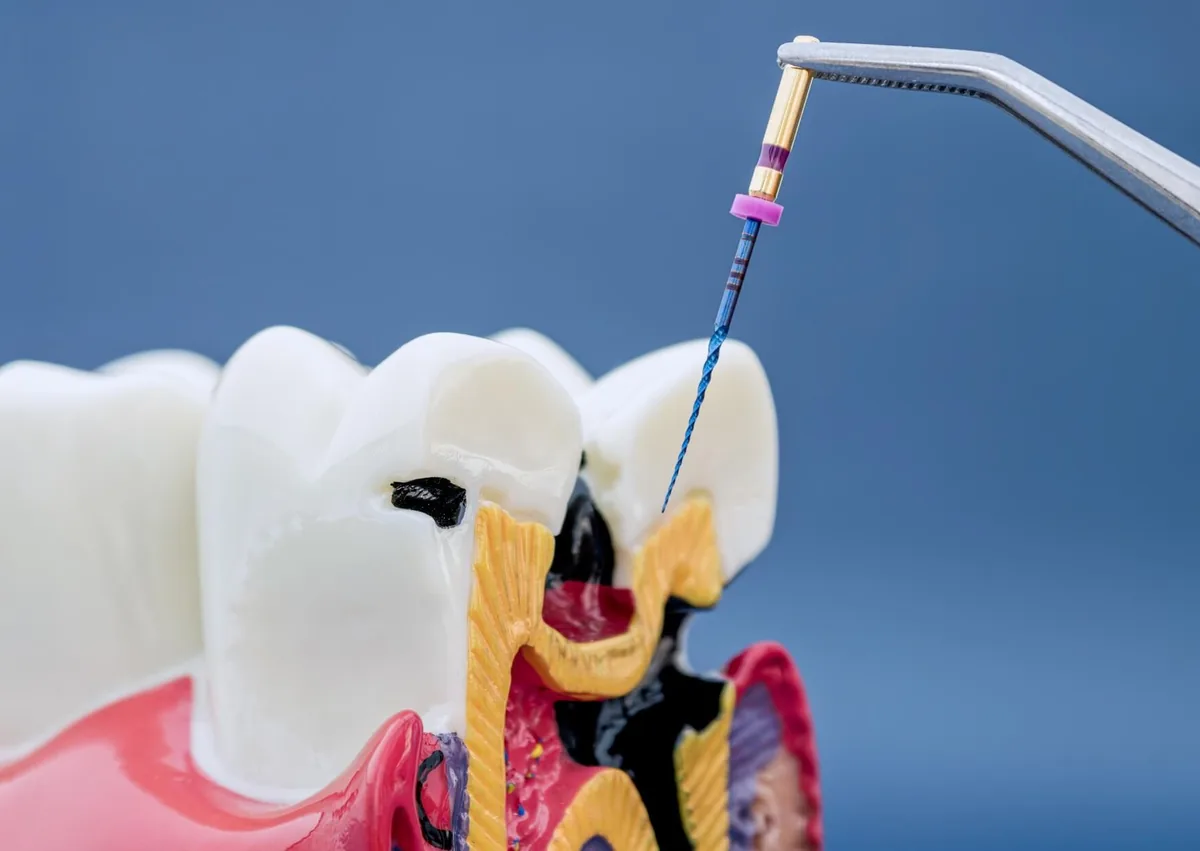
The typical root canal and crown cost without insurance is about $1,800 to $4,500 or more in the United States. The total usually depends on which tooth needs treatment, whether a general dentist or endodontist performs the root canal, the crown material, local fees, and whether you need added work such as a buildup or post.
These are broad self-pay estimates, not a personal quote. A dental exam and X-rays are needed to confirm whether the tooth can be saved and what the full treatment cost will be.
If you’re weighing options to relieve infection and preserve a damaged tooth, a non-surgical root canal can often stop pain while keeping your natural tooth. At CR Smiles in Katy, TX, we focus on comfortable, comprehensive care that helps restore function and prevent further damage.
A root canal and crown are separate services with separate fees. The root canal treats the inside of the tooth, while a crown protects and strengthens what remains; details on materials and options are available under dental crowns. For a closer look at pricing for the endodontic procedure itself, see root canal cost.
|
Treatment Stage |
Typical Self-Pay Range |
What May Affect The Fee |
|---|---|---|
|
Examination and X-rays |
$100 to $400 |
Imaging type and whether emergency care is needed |
|
Front-tooth root canal |
$700 to $1,500 |
Canal anatomy and provider type |
|
Premolar root canal |
$800 to $1,800 |
Number and complexity of canals |
|
Molar root canal |
$1,000 to $2,200 or more |
Multiple canals and difficult anatomy |
|
Core buildup or post |
$200 to $700 |
Amount of tooth structure remaining |
|
Dental crown |
$900 to $2,000 or more |
Material, laboratory, and local pricing |
Molars often cost more because they usually have more canals and more complex anatomy. Published molar root canal comparisons also show how fees can vary by provider and setting.
Retreatment, treatment through an existing crown, or referral to a specialist can also raise the total. Ask whether the estimate includes the exam, X-rays, root canal, buildup, temporary restoration, permanent crown, and follow-up visits.
An itemized written estimate makes it easier to understand the full expected cost and compare offices fairly.
A root canal may be recommended when the pulp inside the tooth is inflamed, infected, or no longer vital. Common causes include deep decay, a crack, repeated dental work, or trauma.
Possible symptoms include lingering hot or cold sensitivity, pain when biting, gum swelling, a pimple-like bump on the gum, or tooth discoloration. Some teeth cause few symptoms, so diagnosis should be based on the exam, X-rays, and testing.
After root canal treatment, back teeth often benefit from a crown because they handle heavy chewing forces and may already be structurally weakened. A front tooth may sometimes be restored with a filling instead, depending on its strength, appearance, bite, and how much healthy tooth remains.
The first question is whether the tooth is predictably restorable. A dentist may look at the depth of decay, crack location, bone and gum support, root anatomy, and whether enough healthy teeth remain to support a lasting restoration.
|
Option |
When It May Be Considered |
Cost Perspective |
|---|---|---|
|
Root canal and crown |
The tooth can be saved and supported |
Higher immediate cost, but preserves the natural tooth |
|
Root canal and filling |
Selected teeth with enough remaining structure |
May cost less, but is not suitable for every tooth |
|
Extraction |
The tooth cannot be predictably restored or saving it is not preferred |
Lower initial fee, but replacement may add substantial cost |
|
Extraction and replacement |
A bridge, implant, or removable option is appropriate (see affordable dental implants for implant options) |
Total cost and treatment time vary widely |
Extraction is not always the least expensive long-term choice if the missing tooth will be replaced. Leaving a space may also affect chewing or allow nearby teeth to shift, though the impact depends on the tooth and your bite.
If the outlook is uncertain, ask about the tooth's long-term prognosis before committing to treatment. A second opinion may help when recommendations differ or when the tooth has a deep crack, limited remaining structure, or prior root canal treatment.
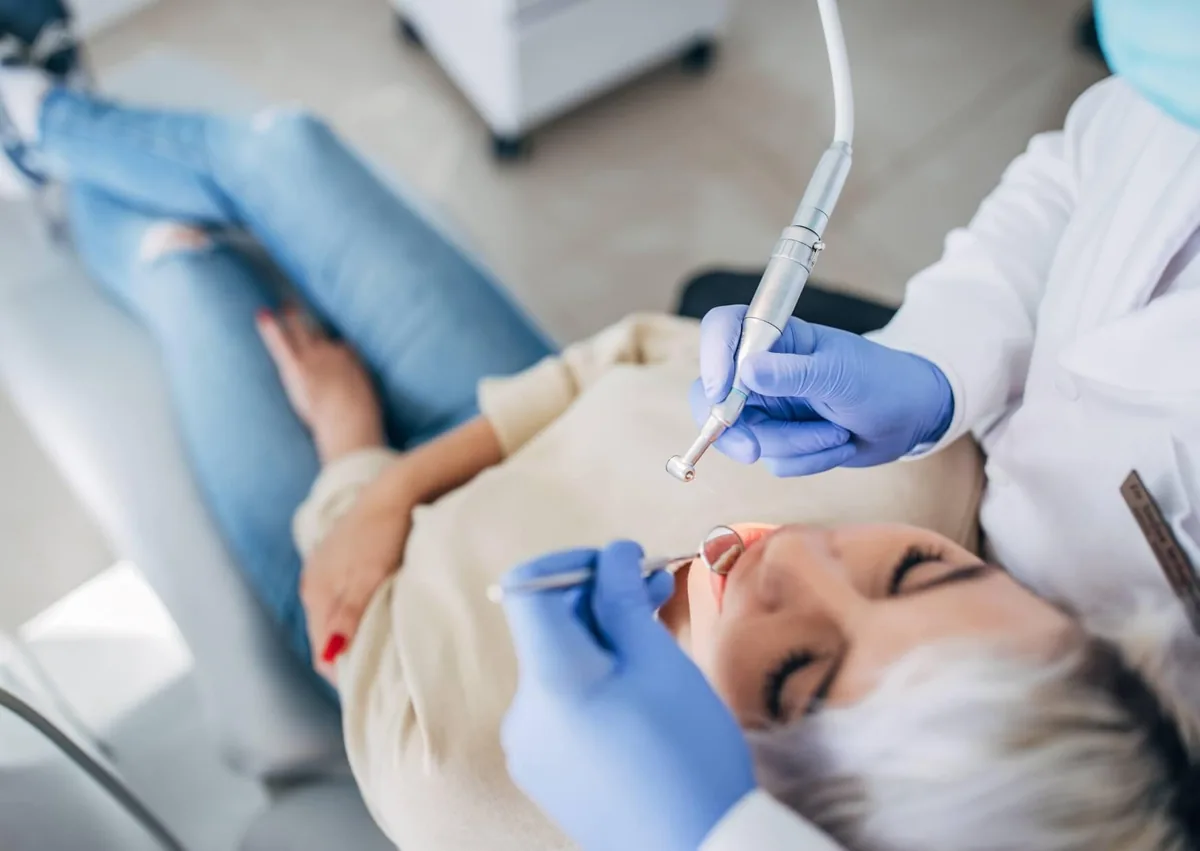
During a root canal, the dentist or endodontist numbs the area and isolates the tooth. The canals are cleaned, shaped, disinfected, and sealed, and the tooth receives a temporary or permanent restoration.
Most patients feel pressure and vibration rather than sharp pain when the tooth is fully numb. Mild soreness afterward can happen, but severe or worsening pain should be reported to the treating office.
The crown process usually involves shaping the tooth, taking a digital scan or impression, and placing a temporary crown while the final one is made. Some offices offer same-day crowns, while lab-made crowns usually require a later placement visit.
The final result should look natural, allow comfortable chewing, and help protect the tooth from further damage. Even after treatment, the tooth can still develop decay or fracture, so regular dental care and home hygiene still matter.
Many dental offices offer phased treatment, financing, or in-house membership plans. Terms vary, so ask about deposits, interest, credit requirements, cancellation policies, and whether the crown fee includes all placement visits.
Dental schools and residency clinics may offer lower fees, but visits can take longer and availability may be limited. Community health centers may use income-based fees, though specialty root canal and crown services are not available at every location.
Discount dental plans are not insurance and may limit which providers participate. Before enrolling, confirm that both the dentist and any endodontist are in the plan, and compare the membership fee with the actual discount for both procedures.
Do not delay an evaluation only because the final crown feels unaffordable today. In some cases, a dentist can discuss safe sequencing, but the right timing depends on the tooth, and a temporary restoration is not meant to last indefinitely.
Seek prompt dental care for persistent tooth pain, pain that disrupts sleep, swelling, drainage, a broken tooth, or difficulty biting. Earlier evaluation may preserve more treatment options and reduce the risk of further damage.
Facial swelling, fever, difficulty swallowing or breathing, swelling near the eye, confusion, or rapidly worsening symptoms require urgent evaluation. Breathing or swallowing difficulty warrants emergency dentistry or emergency medical care.
A consultation can clarify whether a root canal and crown are appropriate, what alternatives are reasonable, and which charges apply to your specific tooth. Bring any recent X-rays if you have them, and ask for a written treatment plan that separates essential care from optional services.
If you have persistent tooth pain or signs of infection, discussing a non-surgical root canal can help preserve the tooth and relieve symptoms. CR Smiles in Katy, TX, offering non-surgical root canal care to patients from Cinco Ranch and Fulshear, can help you decide on next steps; call (281) 394-9600 to schedule an appointment.
Sometimes, but the safe interval depends on the tooth and restoration. A root canal-treated back tooth can be more likely to fracture, so follow the treating dentist's recommended crown timeline and do not rely on a temporary filling longer than advised.
Molars usually have more canals and more complex anatomy than front teeth. Cleaning and sealing those canals can take more time, imaging, equipment, and specialist skill.
No. The decision depends on the tooth's location, remaining structure, bite forces, cracks, and existing restorations, although crowns are commonly recommended for premolars and molars.
Not always. Confirm whether the quote covers the exam, X-rays, specialist care, buildup, temporary restoration, crown, adjustments, and follow-up visits.
Many treated teeth function for years, but no exact lifespan can be guaranteed. Longevity depends on the tooth's condition, the quality of treatment and restoration, bite forces, oral hygiene, and regular follow-up care.